
Cost-effectiveness · Project support
Own team or external experts – what pays off?
Your own staff cost money every month, even when the project is on hold. External experts cost more per hour, but only for as long as you need them. Where the curves intersect, calculate here with your own figures – pre-filled with values from Destatis, BIBB, Oxford Economics and freelancermap.
Four questions, four curves
All curves use the same inputs. Change a value above and all charts and tables update.
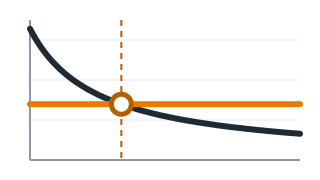
At what utilisation do your own staff pay off?
Cost per productive hour – own staff versus external experts.
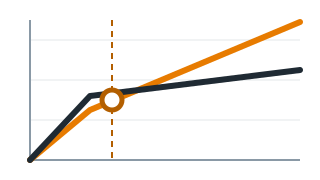
When does outsourcing become more expensive than your own staff?
Costs over the months – including hiring and onboarding.
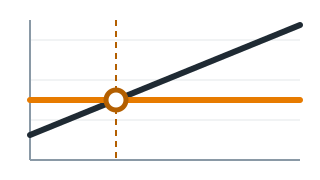
Why is an expert with a high rate cheaper?
Cost per task – expert versus career starter with supervision.
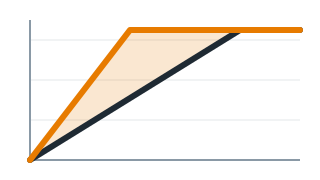
What does training bring?
Learning curve with and without training – the area in between is your gain.
Your figures
All fields are pre-filled with values from studies. Enter the hourly rate from your quote and your demand.
Result
- Your own staff pay off from – utilisation.
- With your demand, own staff become cheaper than outsourcing: –.
- The expert is cheaper as soon as the career starter needs more than – as long.
- Training brings – of additional output in the first year.
Calculation with your figures – no commitment.
At what utilisation do your own staff pay off?
The curves intersect where your own staff are so well utilised that their productive hour costs as much as the expert's.
| Utilisation | Own staff per productive hour | External expert per hour | Cheaper |
|---|---|---|---|
| 40 % | – | – | – |
| 60 % | – | – | – |
| 80 % | – | – | – |
| 100 % | – | – | – |
You pay your own staff for every hour – including waiting time between two projects. The lower the utilisation, the more expensive each productive hour: labour cost ÷ utilisation. You pay the external expert only for the hours you call off.
Example: €45 labour cost at 60% utilisation = €75 per productive hour. Source of €45: Destatis 2025.
When does outsourcing become more expensive than your own staff?
In the short term, external experts are almost always cheaper. The longer and steadier the demand, the more likely your own staff pay off.
| After | Own staff | External expert | Cheaper |
|---|---|---|---|
| 6 months | – | – | – |
| 12 months | – | – | – |
| 24 months | – | – | – |
| 36 months | – | – | – |
Filling a position takes around 4 months on average – during that time the demand has to be covered some other way anyway. A skilled employee recruited externally then costs a one-off €13,689 for recruitment, onboarding and reduced output (BIBB 2025), and full labour costs every month after that – even when your demand fluctuates. The external expert works from the first week – and only for as many hours as you need.
Why is an expert with a high hourly rate cheaper?
Calculation per task that the expert completes in 10 hours.
| Career starter needs | Cost career starter | Cost expert | Cheaper |
|---|---|---|---|
| 1.5 times as long | – | – | – |
| twice as long | – | – | – |
| 3 times as long | – | – | – |
| 4 times as long | – | – | – |
What matters is not the hourly rate but what a completed task costs: rate × hours. On the market, an engineer with more than 10 years of experience costs €95.60 per hour on average, with less than 5 years €61.00 (freelancermap 2026). If the career starter needs more than around 1.6 times the time, the expert is already cheaper – without rework and without the experienced staff's time for supervision.
Training or learning curve: who becomes productive sooner?
Pre-filled with 30 weeks – around a quarter shorter, as with the best onboarding (Aberdeen Group). Enter your own value; you will see the gain in euros in the result above.
| Week | Output with training | Output without training | Difference |
|---|---|---|---|
| 4 | – | – | – |
| 12 | – | – | – |
| 26 | – | – | – |
| 40 | – | – | – |
Without training, a new employee learns on the running project – after graduation it takes 40 weeks on average to reach full performance (Oxford Economics). Training shortens this time. The area between the curves is output you get sooner.
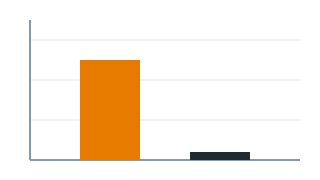
Courses work, briefings hardly
In German companies, formal courses raise productivity; a mere briefing at the workplace shows no measurable effect (ZEW).
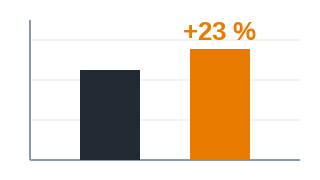
23% more output
Trained employees in Belgian companies are 23% more productive – with only 12% higher wages (Konings & Vanormelingen 2015).
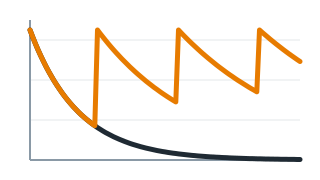
Read up and watch again
Without repetition, what has been learnt is quickly lost (Murre & Dros 2015). With us, you can read up on every training step in the online manual – for AutoCAD P&ID, AutoCAD Plant 3D and Advance Steel also as a video: 3 months included.
Our difference: we train from project experience, not from a software vendor's point of view. Our trainers design plants with AutoCAD Plant 3D themselves – more than 100 projects since 2020, Autodesk Authorized Training Center since 2011. Exercises are tasks as they occur in projects: defining a piping spec, deriving isometrics, incorporating existing plants.
Plus: read up and watch again: every step of the training is in the online manual, for AutoCAD P&IDR&I – Piping and instrumentation diagram Flow diagram showing all pipes, valves, equipment and instrumentation of a plant (P&ID, Piping and Instrumentation Diagram). Background and sources ›, AutoCAD Plant 3D and Advance Steel with video – 3 months included. That is rare.
Two experts and one career starter: our principle for teams
A fixed rule from our experience – no study proves exactly this ratio. What is proven, however: working with more experienced people measurably increases learning – in Germany this corresponds to 4–9% of pay (Jarosch et al., Econometrica 2021).
- Supervision without standstill: one expert keeps working, the second takes time for questions.
- Cover: if one expert is absent, the second knows the project.
- Knowledge stays in-house: the career starter learns on real tasks and grows into the team.
- Costs under control: simple tasks go to the lower rate, difficult ones to the expert.
Example from our projects

26 projects in series
Peak workload at a plant manufacturer: 26 similar projects, around 50–140 deliverable PDFs per project – without new hires.
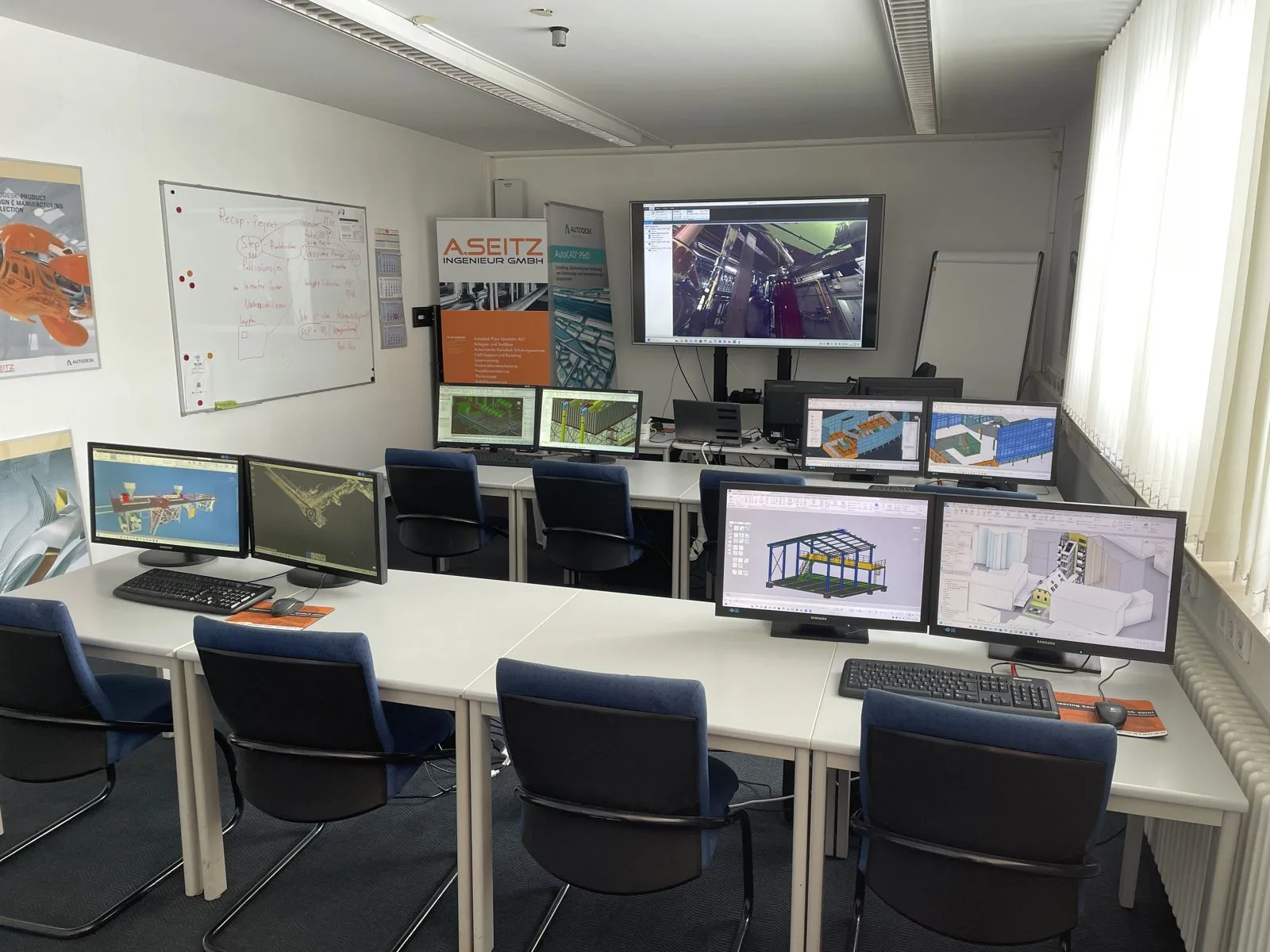
Plant 3D rollout
Template, training project and 5 supported projects – afterwards the team works independently.
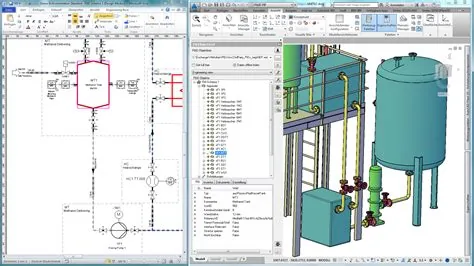
Configuration and support
28 catalogs and 13 piping spec files, followed by support over 4 years.
Sources
- Destatis, press release no. 148 of 29.04.2026: labour costs per hour worked 2025 – €45.00
- BIBB Report 2/2025 (Wenzelmann, Schönfeld, Linckh, Pfeifer): €13,689 per externally recruited skilled employee, around 4 months to fill a position
- Oxford Economics / Unum (2014): The Cost of Brain Drain – 40 weeks to full performance after graduation, 15 weeks from the same industry
- freelancermap (09.02.2026): hourly rate of freelance engineers – less than 5 years of experience €61.00, more than 10 years €95.60
- IAB working time accounts 2025: weekly working time full time 38.19 hours
- ZEW Mannheim (Zwick): further training raises productivity; formal courses work, workplace briefing has no measurable effect
- Konings & Vanormelingen, Review of Economics and Statistics 2015 (Belgium): trained employees 23% more productive
- Jarosch, Oberfield, Rossi-Hansberg, Econometrica 2021 (German data): learning from more experienced people in the company = 4–9% of pay
- Murre & Dros, PLoS ONE 2015 (University of Amsterdam): Ebbinghaus forgetting curve confirmed
- Aberdeen Group 2009 (non-European, reported by CIO.de): the best onboarding shortens the time to full performance by almost a quarter
The curves are simplified models: output rises evenly during onboarding; until the position is filled, the demand is covered externally. No legal or tax advice.
Frequently asked questions
Are the pre-filled hourly rates your prices?
No. It is the market average for freelance engineering (freelancermap 2026). We will give you our rate in the quote – then enter it.
Where do the pre-filled values come from?
From the sources on this page: labour costs from Destatis, cost and duration of hiring from BIBB, onboarding times from Oxford Economics, hourly rates from freelancermap.
Does the calculator replace workforce planning?
No. It shows where the limits are. The decision also depends on knowledge that should stay in-house.
Next step
Done the maths? We will give you a rate, availability and a team for your project.

Before you go …
Don't miss any training dates, C³ invitations and news on AutoCAD Plant 3D and P&ID.
Our newsletter only arrives when there's something important – concise and with tips from practice.
Terms, background and sources 1 term on this page
Brief explanations for reference. They do not replace the standard or code itself.
- R&I – Piping and instrumentation diagram
Flow diagram showing all pipes, valves, equipment and instrumentation of a plant (P&ID, Piping and Instrumentation Diagram).
Symbols and drawing rules: DIN EN ISO 10628-1 and -2. Identification letters for instrumentation: DIN EN 62424 or ISA-5.1.